Entries by dominickdalsanto

, ,

What Is the Difference Between Leak Testing and Broken Filter Detectors?

If you’ve ever walked with a plant manager and maintenance personnel taking care of a dust collection system and heard someone say, “We already have leak detectors, so we’re covered,” there’s a good chance two very different concepts are being mixed together.

Leak testing and broken filter detectors both deal with emissions and filter integrity, but they answer very different questions, operate on very different timelines, and serve different roles in a dust collection program. Confusing them can lead to missed failures, false confidence, or unnecessary downtime.

Let’s break down what each one actually does, when it should be used, and how they work together in real plants.

Leak Testing: A Snapshot in Time

Leak testing is a manual, periodic verification method. It’s designed to answer one specific question: Is the collector leaking RIGHT NOW?

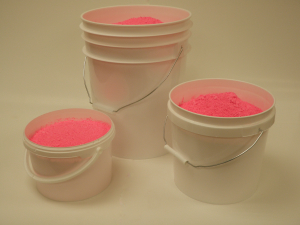
Green and Pink Leak Testing Powder

The benefits of leak testing far outweigh the risks associated with system failures.

Most commonly, leak testing involves introducing a fluorescent powder or tracer into the inlet of the dust collector while it’s operating. The clean air plenum, tubesheet, doors, seams, and other potential leak points are then inspected using UV light to see where powder is getting through.

Dominick Dal Santo, Dust Collection Expert at Baghouse.com, puts it plainly: “Leak testing is one of the best tools we have to confirm installation quality and sealing integrity, but it’s a moment-in-time test. It tells you what’s happening TODAY, not what’s going to happen next week.”

This makes leak testing extremely valuable during:

  • ✔️ Commissioning of a new collector
  • ✔️ Startup after a filter changeout or major maintenance
  • ✔️ Troubleshooting visible emissions or indoor dust complaints
  • ✔️ Verifying NFPA or environmental compliance after modifications

However, once the test is over, the system goes back to normal operation, and anything that fails after that point goes unnoticed until the next inspection.

Real Life Leak Testing Scenario

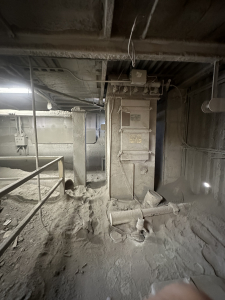
Dusting in the clean air plenum

Dusting in the clean air plenum

A cement plant replaces all filter bags during a planned outage. Everything looks good visually, but during startup they notice some dusting in the clean air plenum. A leak test reveals several minor leaks at door gaskets and a handful of bags that were pinched during installation.

The issues are corrected immediately, avoiding a compliance problem and saving the plant from weeks of chasing unexplained dust. In this case, leak testing does exactly what it’s meant to do: confirm workmanship and sealing before the plant moves on.

But once production ramps up, bag failures caused by abrasion, chemical attack, or pulse cleaning stress won’t be caught by leak testing alone.

Broken Filter Detectors: Continuous Awareness

A entry level triboelectric broken bag detection system

A entry level triboelectric broken bag detection system

Broken filter detectors (often triboelectric or electrodynamic sensors) are continuous monitoring devices. Instead of asking “Is there a leak right now?”, they answer a different question: “Did something change?”

These sensors are installed in the clean air duct or stack and continuously measure particulate activity. When a filter tears, a bag drops, or a cartridge cracks, the particulate level changes… and the detector flags it.

Matt Coughlin, President of Baghouse.com, explains it this way: “A broken filter detector isn’t about absolute emissions. It’s about trend deviation. It tells you that the system isn’t behaving the way it did yesterday.”

That distinction matters. Broken filter detectors are excellent at catching:

  • ✔️ Sudden bag failures
  • ✔️ Progressive filter degradation
  • ✔️ Maintenance errors (like a bag left unseated)
  • ✔️ Early warning signs before visible emissions appear

They don’t replace leak testing, but they cover the gap between inspections.

Real-World Monitoring Scenario

A metal foundry facility runs a baghouse handling fine particulate with tight OSHA exposure limits. Everything passes leak testing during annual maintenance. Six months later, a single filter develops a tear near the snap band due to vibration of the compressed air pulse jet.

There’s no visible plume outside, and no one notices dust inside the plant….yet. But the broken filter detector shows a slow, consistent upward trend. Maintenance investigates, finds the failed bag, and replaces it during a short planned stop. Without continuous monitoring, that single failure could have gone unnoticed for months.

Where Plants Get It Wrong

Dominick notes: “We see facilities assume a tribo sensor means they’re compliant. In reality, it just tells you something changed. You still need testing, engineering judgment, and an understanding of your process.”

On the flip side, some plants rely only on annual or semi-annual leak testing and assume that’s sufficient. In high-risk applications (combustible dust, silica, or recirculated air), that’s often not enough.

Another challenge is poor sensor placement or configuration. A detector installed too close to a fan, elbow, or turbulent area can produce noisy data that operators eventually ignore. At that point, the sensor exists—but it’s not actually protecting anyone.

Leak Testing vs. Broken Filter Detection

In a nutshell, leak testing is diagnostic and confirmatory. It finds where dust is leaking and allows you to physically fix it.

Broken filter detectors are protective and preventative. They alert you when performance changes, often before people or regulators notice.

Matt summarizes it well: “If leak testing is your inspection report, broken filter detectors are your smoke alarm. You wouldn’t choose one instead of the other.”

Our Technical Recommendation

For most industrial dust collection systems (especially those tied to compliance, recirculation, or combustible dust risk) the best approach is layered.

leak detection powder bucketLeak testing should be used:

  • ✔️ After major maintenance
  • ✔️ During commissioning
  • ✔️ When troubleshooting known issues

Broken filter detectors should be used:

  • ✔️ On systems where downtime is costly
  • ✔️ Where indoor air quality limits are tight
  • ✔️ When early warning is more valuable than absolute measurement

And most importantly, both should be backed by people who understand how the system actually operates. Sensors don’t replace expertise. Tests don’t replace vigilance.


Leak testing and broken filter detectors aren’t competing tools. Plants that understand the difference build systems that are safer, more reliable, and easier to manage. If you’re unsure which approach—or combination—fits your operation, that’s usually a sign it’s time for a deeper look at the process, not just the equipment.

Here is where our expertise comes in handy!

,

Baghouse Accessories – What Are They, and What Role Do They Play In Baghouse Efficiency?

The right accessories and replacement parts for your baghouse make all the difference. Pulse valves, solenoids, filter bags, cages, and control boards, every component plays a key role in maintaining consistent airflow and proper cleaning cycles. In this article, we’ll look at the most important baghouse accessories, what they do, and how they help extend the life of your system while reducing maintenance downtime.

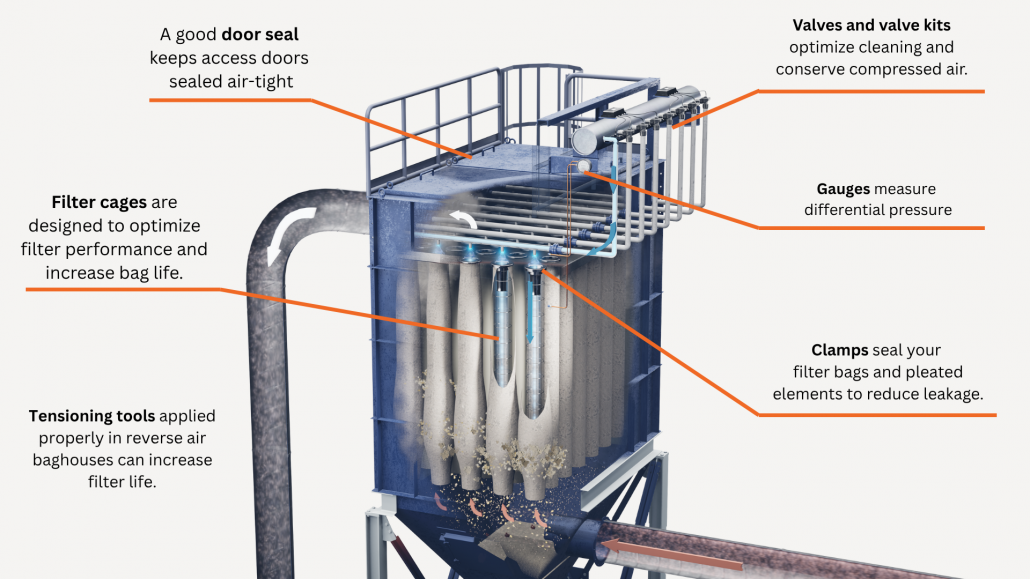
Baghouse accesories: Clamps, gauges, tensioning tools, filter cages, door seals

What Do Controllers and Timers Do?

Baghouse filters are cleaned when compressed air is blown into the filters to release dust buildup. A pulse controller times the burst of compressed air that is used to clean baghouse filters, a practice that improves baghouse efficiency and increases bag life.

Types of pulse controllers

Pulse controllers come in two types, a simple timer and an on-demand timer.

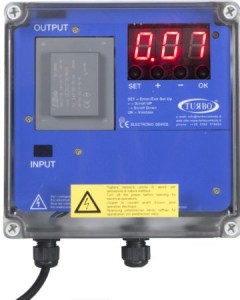
Turbo E2T Timer with 56 Positions• ✅ Simple timer: With this pulse controller, an operator sets a timer for how often the pulse valve will activate. With this type of controller, the bags are cleaned at the set interval even if they do not need cleaning. Typically, trial and error is used to set the frequency. This pulse controller is a lower-cost option because its design is simple and easy to set up. It works best with predictable or consistent loading, and it’s ideal for baghouses that need to be cleaned continuously.

.

a baghouse dust collector control board

• ✅ On-demand timer: For this pulse controller, the timer reads the differential pressure across the baghouse and initiates a pulse sequence once the differential pressure reaches a high set point. It continues to pulse until the pressure across the baghouse reaches the low set point. Once at the low set point, pulsing stops until the differential pressure reaches the high set point again. Because filters are cleaned only when needed, the advantages of an on-demand pulse controller include extended bag life and reduced compressed air consumption.

Set up parameters for pulse controllers

Several parameters can be set on pulse controllers. The simple timer has just two:
• ✔️ Time the valve is open: This time correlates to how much compressed air is released through the valve. A quick pulse of air, for example, is just 0.05 of a second.
• ✔️ Time the valve is closed: This is the amount of time between pulses. It can typically be set to anywhere from one second to several hundred seconds.

Besides the high and low pressure parameters listed above, the on-demand timer also includes the following:

• ✔️ Alarm pressure: Alarms can be set to notify the operator of issues with the bags. A high-pressure alarm indicates a plugged bag. For example, a high-pressure set point may be six, and an alarm may be set for nine or ten. Conversely, a low-pressure alarm indicates a bag needs replacement because of a leak or detachment.
• ✔️ Pulse sequencing: Operators can set the order in which the valves release air.

As an added note, when installing a pulse controller, avoid locations exposed to direct sunlight or areas near heat sources or electromagnetic fields, as these can damage the controller.

Troubleshooting your pulsing system

If you experience issues with the pulse controller, there are several things you can check depending on the problem:
• ✔️ Valves are not pulsing: Check the power to the timer, the differential pressure switch, header pressure, and the solenoid and/or diaphragm valve.
• ✔️ Hissing sound from valves: This may indicate a possible compressed air leak.
• ✔️ If the solenoid air outlet is leaking, check:
 • ➡️ The electrical connection
 • ➡️ The sub-assembly for debris
• ✔️ If the diaphragm valve outlet port is leaking, check:
 • 🔵 The air line to the solenoid
 • 🔵 Header pressure
 • 🔵 The inside valve body for pitting and debris
 • 🔵 The membrane for wear
• ✔️ Bags are not cleaning adequately: Check the pulse pressure, on-time and off-time, and pressure set points. It may also indicate the need for a bag change.

We also recommend that you keep an adequate supply of dust collector filters and pulse valve kits on hand to avoid costly delays in production.

Clean-On-Demand Baghouse Control Systems

Baghouse.com offers a full line of baghouse control systems designed to achieve maximum ventilation and collection efficiency. Clean-On-Demand controls monitor the differential pressure across the filter bags. The user sets the high and low differential pressure set points (generally ½” w.c. (12.7mm w.c.) apart), at which cleaning will start and stop. By operating the baghouse at a stable and optimum differential pressure, you avoid both over-cleaning and under-cleaning the filter bags.

Benefits of Clean-On-Demand Controls
• 🔵 Maintains optimum dustcake for filtration efficiency
• 🔵 Helps protect bag fabric from blinding and bleed-through for better airflow and lower emissions
• 🔵 Reduces flex cycles on filter bags, increasing their lifespan
• 🔵 Maintains stable ventilation with no over- or under-ventilation issues
• 🔵 Helps lower compressed air consumption and operating costs

Standard Clean-On-Demand Controller
• 🔵 Solid-state construction
• 🔵 Digital input for pulse time, pulse duration, and number of valves
• 🔵 Low-profile photohelic gauge with high and low differential pressure set points
• 🔵 Enclosure

Why Are Good Cages Important?

Filter cages might seem like simple components, but they are quite essential. When filter bags don’t fit snugly onto the cages, or when cages are not replaced when needed, system performance can suffer significantly. Neglected filter bag cages are often the root cause of many operational problems in industrial environments.

A key feature is the precise fit between the filter bag and the cage, ensuring proper adhesion and long service life. Quality filter cages are built to withstand cleaning cycles, bag changes, abrasive materials, high temperatures, and other demanding environmental conditions.

Cages should also withstand the pressure exerted by the filter bag during particulate collection and provide uniform support along the entire length of the filter cloth.

Regardless of design, each cage must consistently meet specifications, including correct diameter, total length, and other tolerances. The technologies we use at Baghouse.com ensure your cages are built to spec, providing a precise fit between the filter bag and cage, which results in optimal cleaning performance.

Our dust collector cages can be made to fit existing collectors from any manufacturer, including Astek, Gencor, Flexkleen, Mikropul, and Wheelabrator. We can also manufacture uncommon and specialized cage designs as needed.

Dust Collector Cages models

Clamps – How Do They Keep Your System Leak-Free?

When you buy new filters, it’s important to buy new clamps as well. Clamps are designed to protect your filter bags and simplify installation. Our clamps extend bag life by reducing leakage and abrasion. We offer a variety of designs and sizes engineered to meet your specific needs. They can be used with raw edge, cord, hem, or sleeve-constructed bags, and some pleated filter elements.

There are several reasons why clamps can fail:
• ❌ Misapplication
• ❌ Misplacement
• ❌ Over-torquing
• ❌ Reuse of old clamps
• ❌ Corrosion

Our dust collector experts recommend replacing clamps each time you change your filters.

Filter clamps different models

Baghouse.com clamps are designed to protect your filter bags and simplify installation, extending bag life by reducing leakage and abrasion.

Tensioning Tools – Why Are They Key for a Secure Filter Fit?

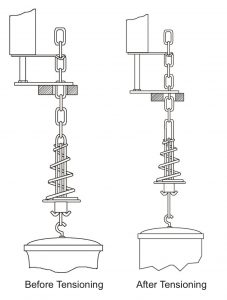
Baghouse Tensioning DiagramTensioning tools provide proper support to filter bags. Improper tensioning is one of the main causes of bag failure in these systems. Excessive tensioning causes harmful stress on fabric yarns and threads, while insufficient tensioning prevents proper dust cake release.
We have developed a variety of tensioning assemblies to best fit your application. The assemblies are available in chrome silicon steel for moderately elevated temperatures or 17-7 PH stainless steel for high-temperature applications.

Conical Spring

Unlike a linear spring (which compresses equal amounts for equal pounds of load applied) a conical spring becomes harder to compress as heavier loads are applied. It acts as a shock absorber, preventing the fabric from collapsing completely during the reverse air cycle, and reduces the “popping” effect on the bags when returning to service. This spring is used in the I-Bolt and Double Draw Bar Assembly and the Pre-Loaded Rod and Draw Bar Assembly.

I-Bolt and Double Draw Bar Assembly Features and Benefits

• ✅ Hitch-pin design allows easy maintenance when re-tensioning
• ✅ Simple adjustment and installation reduce labor costs
• ✅ Provides proper tensioning for optimal collection efficiency
• ✅ Prevents bag-to-bag abrasion
• ✅ Patented cup washer centers the spring on the bolt, resisting buckling and abrasion
• ✅ Non-linear compressibility supports both bag and dustcake
• ✅ Provides required pre-load and travel for correct tensioning

The Pneu-Magnum AC Tool

The Pneu-Magnum AC Tool is a pneumatic tensioning tool designed to simplify and standardize the process of tensioning filter bags in reverse-air baghouse systems. It uses compressed air to lift and apply precise tension to the filter bag assembly, ensuring that each bag is tightened evenly and to the correct specification.

This tool operates on a 3:1 pressure principle, meaning that for every 1 psi of air pressure applied, the tool produces approximately 3 pounds of lifting or bag tension force. This allows operators to easily set the desired tension level by simply adjusting the air regulator knob—eliminating the need for manual guesswork or inconsistent tightening with hand tools.

The Pneu-Magnum AC Tool makes filter bag tensioning easier because it:

  • ✔️ Provides accurate and repeatable tensioning for consistent bag performance across the entire baghouse.

  • ✔️ Reduces manual labor by using pneumatic power to compress the spring and lift the bag, instead of requiring physical effort.

  • ✔️ Includes a built-in pressure gauge and regulator for precise control of the applied tension.

  • ✔️ Improves safety, since operators can tension bags without having to reach or strain around the assembly.

  • ✔️ Helps extend filter bag life by preventing issues like over-tensioning (which can damage fabric) or under-tensioning (which can cause bag flex and abrasion).

Pneu-Magnum AC Tensioning Tool

Valves and Valve Kits – What Role Do They Play in Cleaning Efficiency?

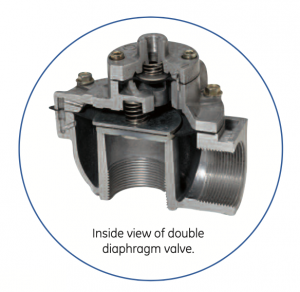
Inside diaphragmThe efficiency of your pulse-jet cleaning system depends on proper valve operation. Diaphragm and solenoid valves work together to ensure consistent baghouse cleaning performance. Baghouse.com provides technical support, rebuild instructions, and in-house engineering assistance for site-specific valve issues.

We supply a wide variety of valves designed to accurately fit your application:
• 🟠 Valves can be coated for extremely corrosive environments
• 🟠 Integral solenoid valves are mounted directly on the diaphragm valve
• 🟠 Remote solenoids are mounted in a separate enclosure
• 🟠 Valves available for high-volume / low-pressure applications

Troubleshooting Diaphragm and Solenoid

Door Seals and Access Doors – How Do They Protect Against Air Leaks and Pressure Loss?

Baghouse Door Gasket Seal GuideDoor seals help prevent outside air from leaking into the system. Properly sealed doors avoid corrosion, emissions, and production losses. A poor door seal is one of the most overlooked maintenance issues in dust collectors and can lead to:
• ❌ Corrosion of doors and walls
• ❌ Fugitive emissions
• ❌ Production losses
• ❌ Maintenance problems
• ❌ Reduced airflow due to condensation and filter blinding

Helpful Maintenance Tips
• ✅ Replace old door seals regularly
• ✅ Ensure the door is not warped and seals tightly
• ✅ Avoid frequent opening of access doors, which can disturb the seal

Baghouse.com Has the Perfect Access Door for Your Dust Collector

Need custom-made doors for your baghouse, ESP, or SCR system? Baghouse.com supplies access doors to fit all OEM applications, whether you need a stamped, round precipitator door with a key interlock, an insulated center-pivot baghouse door, or a large rectangular moisture-proof scrubber or SCR access door. All our doors are custom-manufactured for your needs. Many are preassembled and stocked, while less common styles are assembled and welded using precision jigs to ensure a perfect fit.

Gauges – How Can They Help You Track System Performance?

Keep Differential Pressure in Check with Pressure-Measurement Gauges

High differential pressure can damage filter bags, reduce airflow, and increase operating costs. Monitoring differential pressure with reliable gauges can also enable clean-on-demand functionality.

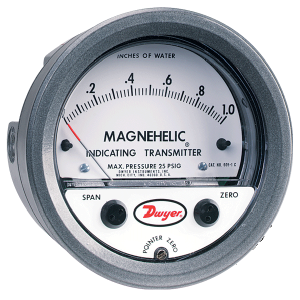
Magnehelic Gauge

magnehelic gauge

A pressure gauge (can be magnehelic or photohelic) measures the differential pressure

The magnehelic gauge measures differential pressure between the clean and dirty sides of the baghouse, indicating the bag’s resistance to airflow. A sudden pressure drop suggests a leak, while a sharp rise indicates filter blinding or excessive dust cake buildup. This gauge provides critical data for troubleshooting and assessing operating conditions.

Photohelic Gauge

A photohelic gauge adds automation to the magnehelic’s measurement function. It allows operators to set high and low pressure points that automatically start and stop the pulse cleaning system as needed, maintaining stable performance and bag life.

Surge Valve

The Surge Valve provides fast, easy cleanout of gauge lines without manual disconnection.
Benefits include:
• 🔵 Simple push-button operation for quick line cleaning
• 🔵 Optional timer-controlled automatic cleaning
• 🔵 Temperature range 32°F (0°C) to 200°F (93°C)
• 🔵 Heavy-duty design rated for up to 150 psi (10.34 bar)

Auto Purge Valves

Automatic purge valves prevent moisture buildup in the compressed air header of pulse-jet systems. Without them, water from compressed air can cause corrosion, agglomeration, and hard-to-clean dust cake. The valve is installed at the bottom of the air header assembly and opens briefly during each pulse to discharge moisture, keeping your system dry and efficient.


Baghouse accessories play a critical role in maintaining efficiency, extending filter life, and ensuring reliable operation across all types of dust collection systems. Whether you need replacement parts, technical guidance, or complete accessory kits, Baghouse.com can help you find exactly what you need.
If you need assistance selecting or requesting baghouse accessories, our team is ready to help… just reach out to us, and we’ll make sure you get the right components for your system.

, ,

Practical Tweaks for Lower Energy Bills and Cleaner Air On Your Dust Collection System

The industrial sector is one area that often has difficulties finding ways to go green.

The industrial sector is one area that often has difficulties finding ways to go green.

Finding new ways for companies to reduce their environmental impact is vital in today’s ever-increasingly “green” conscious world. While many are able to employ a number of popular methods to decrease their environmental impact, others are limited in their applications of many of these methods due to the nature of their business. The industrial sector is one such area that often has difficulties finding ways to go green.

Often they are not able to directly cut back on their electricity usage due to the nature of their process. Perhaps safety regulations interfere with their efforts to trim incandescent light usage, or the manufacturing process itself cannot operate without a large amount of electricity (e.g. heavy metals smelting).

Are there any methods these companies can use to lessen the impact they have on the environment, while still providing these essential products and services?

Decreasing Environmental Impact Through Dust Collection System Efficiency

An easy way for companies to decrease their environmental impact is by making efficiency improvements to their dust collection system.

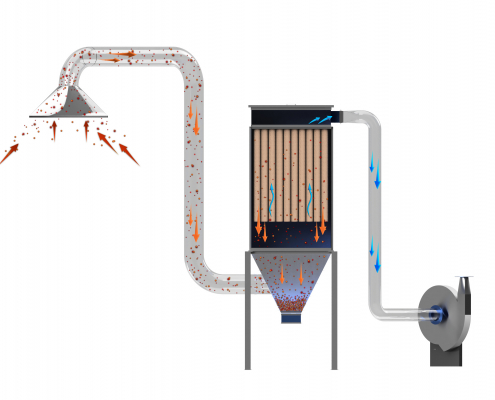
A dust collection system is used to collect dust particles that are generated in industrial processes before they escape into the atmosphere. It does so by using a large system fan to create a powerful vacuum in the ductwork throughout the plant.

Dust-laden air is captured at the source at one or more pickups or drop points, which can be hoods over dust sources or ducting directly connected to equipment.

Diagram showing dust collection system from the dust pickup to the fan on the clean side of the ductwork

At each location where dust is generated (hammer mills, transfer points [bucket elevators, conveyor belts, etc.], exhaust stacks, etc.) the air is sucked up through venting hoods to transfer the dusty air to the dust collector. Once in the collector, the dirty air is forced through a series of filter bags to remove the dust particles from the air. Finally, the now clean air can be exhausted to the outside atmosphere.

These systems are required by law to be installed in almost every industrial facility for safety and environmental reasons. In most cases the dust generated by industrial processes are treated as pollutants and cannot by law be allowed to exhausted into the outside air. This is especially true of processes that generate hazardous dusts (containing chemicals, heavy metals, etc.) or that are dangerously combustible (such as food products like flour and sugar, powdered metals like iron dust, etc.).

The mechanics of this process require a large amount of energy. By working to maximize the efficiency of the entire process, plant operators can at times drastically reduce the amount of energy needed to operate the system, reduce the amount of maintenance needed, and reduce wear and tear while all the while increasing overall capacity, and even increasing the plant’s operating potential.

Ways to Increase Dust Collector Efficiency

You might think that a system as complicated as this would require massive investments in capital and manpower to see any improvement in efficiency. “The reality is that there are a number of simple things plants can do to increase their baghouse efficiency by up to 20%” says Dominick Dal Santo, Sales Director of Baghouse.com. “Some [things that can increase efficiency] are as simple as installing gauges to measure things such as pressure, airflow, and filter status in the baghouse. Others involve using that data to adjust the cleaning cycles on the baghouse to be more efficient.” He went on relating the cost of installing these instruments was minimal, stressing that in-house electricians and other personnel can easily install the equipment.

“In most cases, the best return on investment is fine-tuning the cleaning system’s settings” says Dominick. Most baghouse dust collectors use a series of compressed air bursts to clean off excess dust build-up from the surface of the filters. “The more dust that builds up on the surface of the filter, the harder the fan has to work to pull the same amount of air through them.” A balance must be found between cleaning filters often (to keep resistance low), limiting the number of cleaning pulses (to minimize the use of often-expensive compressed air) to avoid lowering collection efficiency (a certain amount of dust buildup is needed to capture the maximum amount of particles) and minimize wear and tear on the filters (the more often and more aggressively cleaned the filters are, the shorter their service life).

Fine-tuning the cleaning system is a very difficult balancing act, but finding that optimum balance is the key to decreasing the cost of operating a dust collection system” relates Dominick. Often times a facility will have outside dust collection technical advisors come out to their plant to help them find the best setting for each particular situation.

Other simple methods of optimizing the system include making sure the correct filters for the application are being used. “Many plants cut corners [initially] and buy cheaper filters that are not sufficient to meet their needs.” Dominick says that many plants could stand to switch to the latest filter technology that includes high-tech filter fabrics and treatments. “A lot of plants will see huge operational improvements when they switch to bag filters with PTFE membrane technology. These filters last many times longer than traditional fabrics, are easier to clean (therefore requiring less energy to clean them), and capture more particulate than others.”

Another solution that at times is very effective is switching from standard filter bags to pleated filter elements. These are essentially filter bags that have pleats that allow them to fit more filter fabric in a smaller amount of space than traditional filter bags. Among the host of benefits that they offer, they can allow a plant to increase its filtering capacity without building a new collector, reduce wear and tear, increase collection rates, and lower installation and maintenance costs.

Potentially Lower Energy Costs By 20%

While cutting 20% of the dust collection system energy costs may not sound like much, on the industrial scale, its potential savings can be massive. Let’s take two examples to see how much we could save.

Let’s say that a plant decides to implement a few of the methods described above to improve the baghouse cleaning cycle, specifically, they manage to increase the amount of time between each cleaning pulse (thereby lowering their compressed air use and fan brake horsepower). Just how much can they expect to save each year in energy costs alone?

Cleaning Efficiency


Size of Collector

Bags#: 144

Rows: 12

Valves: 1 1/2 double diaphragm

Electricity Cost $0.07

Fan energy Costs

System flow (ACFM): 11,000

Current SP (Inches w.c.): 12

Compresses Air Costs

Pulse Pressure (psig): 100

Number of pulses at the same time: 1

time between pulses (Sec): 5

BHP used: 33.3

Pulse pressure: 100

Number of pulses at same time: 1

Time between pulses (sec): Current 5 – New 7.5

BHP: 5.00

Savings per day: $5.82

Compressed air per year: $2,094.77

Fan savings per year: $2,539.00

By improving just one aspect of their system’s operation, this plant can expect to see savings of $4633.77 each year. This does not include the added benefits of longer filter life, better collection rates, and lower maintenance costs. Imagine if this example were scaled up to a large plant with a system 100 times larger (easily the case in many larger plants), these simple improvements could easily translate into millions of dollars per year for this plant.

Everyone, including industrial plants, can find ways to increase their energy efficiency and reduce their environmental impact. While identifying ways to do so might be harder in certain sectors of the economy, there are still ways out there. For industrial plants, whose options are at times quite limited, improving dust collection system efficiency is often a surprisingly easy way to reduce their environmental impact, while simultaneously increasing production, reducing plant downtime, and lowering operating costs.

Traditional Filter Bags vs. Pleated Filters

what is cheaper: a filter bag or a pleated filter?

Traditional filters usually mean lowest cost per filter, but with pleated elements the overall short term and long term cost of replacing and maintaining your baghouse can be dramatically reduced

Switching from traditional filter bags to pleated filters can significantly reduce both energy costs and overall maintenance expenses. Here’s why the numbers make sense.

First, energy consumption drops dramatically: in our comparison, the filter bag system consumes about $72,392 in energy over the same period, while the pleated filter setup uses only $43,659. That’s a 40% reduction in energy use. The main reason is that pleated filters have a larger filtration area within the same space, which allows air to flow more easily through the media. With less resistance to airflow, the system’s fan doesn’t have to work as hard, so it draws less power. Lower fan load = lower energy bill.

Second, pleated filters are cheaper to maintain in the long run. Although their initial cost is higher ($6,336 vs. $4,480 for filter bags), you save on labor and replacement frequency. Pleated filters often last longer and are easier to install, cutting labor costs almost in half ($900 vs. $2,700). Plus, because they maintain stable airflow longer, they reduce strain on the cleaning system, lowering wear on components like valves and compressors.

Altogether, the monthly operating cost drops from $1,658 to $1,060, saving nearly $600 per month (over $7,000 a year) all while improving system performance and reducing downtime.

Filter Bags

Activity              0       12     24     36     48     total

Fabric buy         2,240          2,240                   4,480

Labor (install)    1,350          1,350                   2,700

Energy            72,392                                   72,392

Monthly cost 1,658


Pleated Elements

Activity              0       12     24     36     48     total

Fabric buy         6,336                                      6,336

Labor (install)      900                                         900

Energy            43,659                                    43,659

Monthly cost 1,060


Benefits of Switching to Pleated Filters

  1. Reduce costs by up to 60%.

  2. Many think older filters save money… they don’t.

  3. Pleated filters can:

    • ✅ Cut energy and operating costs by up to 50%.

    • ✅ Require fewer filters overall.

    • ✅ Lower labor and replacement expenses.

    • ✅ Use less compressed air.

  4. Built for modern, heavy-duty production. They replace existing bags and cages, no expensive system rebuilds required.

  5. Capture more dust thanks to their larger filter area, and last up to twice as long as standard bags.

  6. Fewer filters, less work. Lower maintenance time and labor costs.

  7. No system modifications needed,  just install and start saving.


There are many additional ways to reduce energy consumption and improve the performance of your dust collection system beyond the methods discussed here. The key is knowing where to look, and that’s where expert guidance can make all the difference.

Maintenance Manager contacting different vendors asking for ballpark quotes for their dust collection systemAt Baghouse.com, our team specializes in helping plants identify and implement the most cost-effective improvements for their specific systems. Even small adjustments can translate into massive annual savings, reduced downtime, and a cleaner, safer working environment.

,

How Can I Get The Best Price For Baghouse Filters?

The process of selecting a baghouse filter supplier for your next set of replacement filters might seem like a simple task. You might think that all you need to do is call them up, tell them your model number and you will be set. But is it really that easy? Can you always rely on just any supplier to get you the right bags, at the best price, every time?

Outlined below are several things that will help you to find the right supplier for your next set of replacement baghouse filters. Going into the filter quoting process armed with this information will enable you to secure the products at a fair price. These are the three key points to keep in mind when searching for your next set of replacement bags.

Have The Correct Information Before You Call

Most people begin their search for replacement bags with only the most basic of information, if any at all. At times all they have is some supplier’s arbitrary product number from their last set of bags, or a serial number from the side of their baghouse. The fact is that there is no central database of baghouse filters out there for your supplier to check. The majority of these product numbers are from their respective manufacturers and only for their internal record keeping/branding.

In order to receive an accurate replacement baghouse filter RFQ more information will be needed. While you may not have easy access to all of this information when sourcing quotes, the more you have the easier it will be for the supplier to give you an accurate quote. Information to have on hand includes:

✅ Dust Collector Type – What kind of filters, cleaning system type, etc.

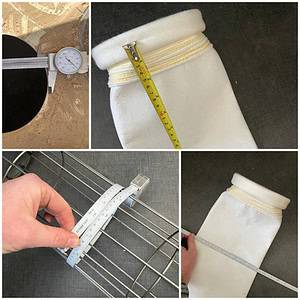
Measuring Bags & Cages

Instructions Step-By-Step on how to measure dust collector filter bags and cages

✅ Filter Measurements – Physical dimensions of the filters

  • ➡️ Length
  • ➡️ Diameter
  • ➡️ Flat-Width

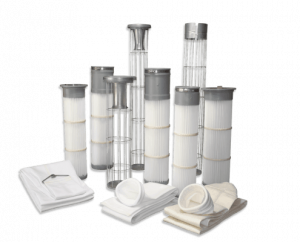
Baghouse.com filter bags and pleated filters✅ Filter Construction – This differs based on how the bags are installed in the baghouse

  • ➡️ Top (Snapband, Strap, Raw Edge, etc.)
  • ➡️ Bottom (Snapband, Disk, Compression, etc.)

✅ Filter Fabric – The material along with any coatings, finishes or membranes

  • ➡️ Fabric (Polyester, PPS, Cotton, Fiberglass, etc.)
  • ➡️ Coating/Finish (Singed, fire-resistant, etc.)
  • ➡️ Membrane (PTFE, etc.)

✅ Special Considerations – Special added features needed only on certain bags

  • ➡️ Antistatic wires
  • ➡️ Support rings

It is also good to include a general overview of the process the filters are used for. This would include air temperature, product to be filtered, alkali or acidic level, combustibility of the dust, etc. You should also including information about how often you replace your filters, system pressure drop, filtering efficiency. While not absolutely necessary, this information will allow a good supplier to offer suggestions for different products that might improve the operation of your system.

Remember to have as much of this information on hand before you begin contacting filter suppliers. If you are not sure about some of these specifications try to get as much as information as possible and then a good filter supplier can help you to find the rest.

For help see article How to Chose The Correct Baghouse Filter.”

How to Choose a Baghouse Filter Supplier

There are hundreds of filter suppliers, manufacturers, and sales reps out there to choose from. Finding one that will get you the best product and provide you with the best service for a fair price is no easy task.

Baghouse technician inspecting a new dust collector

Often times, companies portray themselves as “dust collection experts” when in reality they are only sales reps that have little real knowledge of how these complex industrial systems operate. You will want to consider their level of experience in the industry. Companies with real-world experience in the field are able to provide a vastly superior service than the rest. For example, an experienced supplier will be able to not only take your order, but also offer suggestions on how to improve your dust collector operation by offering tips on installation methods, maintenance procedures, and other ways to increase system efficiency, and extend bag life. They also will be able to offer suggestions for different products (such as new fabrics, pleated elements vs. traditional bags, etc.) that could reduce costs and increase efficiency.

Additionally, you should look into the reliability and trust-worthiness of the company before doing any business with them. This can include asking for references from their previous clients, reviewing their return policy, and any guarantees they may offer on their products.

Baghouse filter change

Routine maintenance is critical to ensure your dust collection system operates efficiently.

Additionally, you may wish to seek out a supplier that also offers baghouse filter replacement services as well. Having qualified technicians install your new baghouse filters often is a better choice than using in-house personal. Many times filter suppliers will provide you with a far better price for your filters if you also use them for the service work.

The knowledge an experienced supplier can provide is invaluable. Take advantage of this by seeking out a trust-worthy, and experienced supplier.

Note: A good filter supplier should allow you to send in a sample of your current bags to ensure they are measured correctly. This can be an extra bag, or one from the baghouse (you can remove it and cap off the spot where it was to prevent leaks).

Do Not Forget About Filter Replacement Services!

While many facilities elect to install their replacement filters themselves, usually to keep costs down, it is not always the best idea to simply assume that using in-house labor is the best option. Many problems can result when workers without specific baghouse training attempt to carry out baghouse service work. This can include damaging the filter bags during installation (some bags such as those with PTFE membrane are somewhat fragile and require care when handling), improperly installing the bags (not sealing them correctly, improper tension, etc.) that can lead to leaks and early failure of the bags among other things. Additionally, workers may not have experienced dealing with baghouse-specific safety hazards and could injure themselves quite easily.

Furthermore, using in-house labor often takes much longer than using experienced baghouse technicians to install your replacement filters. These technicians are experienced in the design and operation of all different types of baghouses and know the best methods for replacing the filters safely in the shortest amount of time. Often when facilities choose to have in-house labor do the filter changeout it results in long delays that cost the plant much in terms of labor costs and facility down-time. Additionally, many times some of the filters are damaged or installed incorrectly and thus the plant will have to spend additional resources later on to track down the problem and correct it.

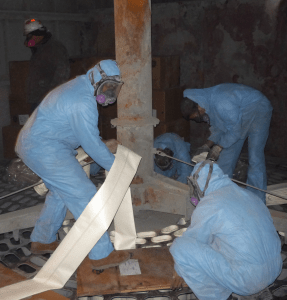
Example: One plant decided to have its normal maintenance workers change out all of its bags. 18 compartments, with 200 reverse-air, springs and chains. On average it took them 3 days to do one compartment. Often with mistakes (poorly sealed bags, not fitted in the snapband, wrong tension, etc.). Our crews did 4 a day, and scrapped the walls of rust scale and did leak testing.

Expert crews are trained to recognize problems, holes, warped metal, failing welds, rusting metals, moisture problems, abrasion, etc. Many filter suppliers also provide replacement services as well. While we will have an additional article on the topic of selecting a baghouse service provider, in short we can say that selecting a service provider may be even more important than choosing the filters themselves. A qualified and experienced service team will not only ensure that filters are installed correctly and safely, but will also verify that the system operates at peak efficiency after installation. This includes performing inspections, identifying potential issues such as leaks or improper bag fit, and running leak testing procedures to confirm optimal performance. Partnering with a trusted provider helps extend filter life, minimize unplanned downtime, and maintain compliance with emissions regulations.


Conclusion

Sourcing a quote for replacement baghouse filters is not a task to take lightly. The difference between a capable filter supplier and a poor one is dramatic. While it may not always be easy to find a good supplier, by following the suggestions in this article you can find one that can provide you with the products you need for a fair and reasonable price.

, ,

Controlling Secondary Dust Sources to Increase Dust Collection System Efficiency

What is a Secondary Dust Source?

Even the best-designed dust collection system has its limits. While it captures emissions at their source, it can’t always handle secondary dust created by leaks, material spills, poor housekeeping, or even dust brought in through open doors, windows, or the ventilation system. These “hidden” sources often make the difference between a system that works and one that feels ineffective.

Dust leaking due to incorrect installation of filters

Dust levels inside a facility can spike for reasons that don’t always point to the collector. Common culprits include:

  • ❌ Inadequate maintenance of dust collection equipment or dust-generating processes
  • ❌ Poor housekeeping practices
  • ❌ Recirculating air that still contains dust particles
  • ❌ Emissions from dust collectors that aren’t properly controlled

Of course, all of this assumes that major sources of dust are already equipped with the right collection systems. The focus here is on the secondary factors that can make or break system performance.

Administrative Measures That Make a Difference

Many plants benefit from creating a dedicated dust control task force that includes plant managers, safety managers, and production leads.

Many plants benefit from creating a dedicated dust control task force that includes plant managers, safety managers, and production leads.

Sometimes the best improvements aren’t mechanical but managerial. Establishing a dust control policy backed by leadership sets the tone. Many plants benefit from creating a dedicated dust control task force that includes plant managers, safety managers, and production leads. This group’s role is to survey the facility, set priorities, assign solutions, track progress, and estimate costs.

Education is another powerful tool. A short training program goes a long way in helping employees understand company policies, government standards, reasons for dust surveys, and their own role in reducing exposure. Workers who know why dust control matters are far more likely to support and maintain it.

Managers can adjust work schedules to limit dust exposure, reschedule high-dust activities like hopper emptying to off-hours, and ensure respirators are accessible and used correctly can make a big difference. 

Periodic Dust Housekeeping Checklist

✅ All mobile equipment (trucks, front-end loaders, dozers, etc.) clean.

✅ Motors and switch gear clean of excessive dust, oil, slurry, and debris.

✅ All operating department floors and working surfaces to be vacuumed or washed and free of scrap or debris.

✅  Tools, bars, shovels, etc. stored in racks.

✅ Hoses washed down on reel installed and maintained at such points as slurry pumps, stone belt transfer points, etc.

✅ Safety shower operational, available, and clean.

✅ Safety eyewash bottle, first-air kit, and stretcher checked.

✅ Dust accumulations around process equipment at a minimum; spills promptly cleaned up.

✅ Fire extinguishers checked and available.

✅ Belt-conveying systems free of spills and buildup, particularly at transfer and loading points.

✅ Building siding and roofs properly maintained and free from broken or loose sheets.

✅ Building doors and windows clean and in good repair at all times.

✅ Locker rooms neat, clean, and in sanitary condition.

✅ Offices neat and orderly.

✅ Bulletin boards available and properly maintained.

✅ Unpaved roadways and parking areas treated to minimize dust.

✅ Yards and fields mowed frequently.

✅ Plant storm sewers and open drainage ditches clean.

✅ Parts inventory stored in orderly fashion.

✅ Traffic lanes in shop areas clearly marked and free of scrap.

✅ Abandoned process equipment and machinery promptly removed from the plant.

Preventive Maintenance Programs

Preventive maintenance (PM) programs often pay for themselves many times over. Scheduling regular inspections and keeping spare parts on hand can reduce breakdowns and avoid costly interruptions.

  • ☑️ Conduct PM programs on all dust control system hardware and components, as well as dust-producing sources, during plant shutdowns or as recommended by the equipment manufacturer.
  • ☑️ Carry all necessary spare parts in sufficient quantities for dust control systems.
  • ☑️ Give high priority to patching holes, caulking and sealing cracks, and maintaining dust seals.
  • ☑️ Inspect and adjust all belt conveyors and their skirting rubber and dust seals.
  • ☑️ Inspect belt conveyor idlers and non-moving idlers. Remove and replace missing or broken idlers.
  • ☑️ Inspect all belt conveyor training idlers. Adjust them as necessary so the conveyor belt does not travel laterally.
  • ☑️ Shut and clamp all access and inspection doors before any operation begins. Schedule adequate time for workers to perform routine cleanup at work stations.
  • ☑️ Rotate periodic cleanup among crews.
  • ☑️ Inspect all dust seals and repair or replace.
  • ☑️ Inspect belt scrapers on belt conveyors and adjust. Replace worn-out components.
  • ☑️ Measure velocity and static pressures weekly.
  • ☑️ Check for plugged ductwork and clean it immediately. If this problem occurs repeatedly, redesign the ductwork.
  • ☑️ Develop safeguards to prevent overflowing bins.
  • ☑️ Follow the preventive maintenance program for dust collectors, fans, and motors.
  • ☑️ Inspect nozzles and other components periodically. Replace worn-out nozzles as needed.

Read article: 3 Baghouse Maintenance Tasks for Your Next Shutdown/Outage

Operating Procedures That Protect Workers

Even the best equipment won’t perform if it’s not operated properly. Operators should know that dust control systems must be running before production begins. Compressed air shouldn’t be used to clean dust off clothing or equipment… it just puts the dust back into the air. Instead, use vacuum systems or water spray during shutdowns.

Other simple practices include slowing down conveyors to reduce dust circulation, installing alarms to alert staff when collectors shut down, and removing obsolete equipment that serves as a dust trap.

Don’t Forget Outside Sources

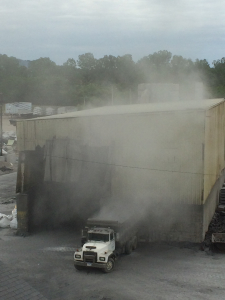
Haul roads, loading and unloading areas, and stockpiles are major contributors to secondary dust.

Haul roads, loading and unloading areas, and stockpiles are major contributors to secondary dust.

Haul roads, loading and unloading areas, and stockpiles are major contributors to secondary dust. Even if they’re outside the building, dust can blow or be pulled in through air intakes, doors, and windows. Treating or paving roads, spraying active stockpiles, and enclosing loadout areas with their own dust controls all help. Positioning air intakes to minimize exposure and using automatic bin level indicators to prevent overflows are additional ways to keep outdoor dust from becoming an indoor problem.

Recirculation: Handle With Care

Recirculating air from dust collectors can save heating costs (especially in colder climates), but it comes with risks. If not properly designed and maintained, the system can send dust right back into the workplace. Negative pressure from poor make-up air planning can also pull in outside contaminants or create drafts that affect both workers and equipment.

Secondary sources—whether from poor housekeeping, neglected maintenance, or outdoor dust blowing inside—can overwhelm even the best systems.

Secondary sources—whether from poor housekeeping, neglected maintenance, or outdoor dust blowing inside—can overwhelm even the best systems.

If a facility does recirculate, safeguards are essential: a secondary air-cleaning system, fail-safe monitoring devices, warning alarms, and emergency bypasses to the outdoors. Cleaned air should be distributed carefully to prevent local “mini dust storms.” For hazardous dusts with low exposure limits, recirculation is generally not recommended.

Secondary sources, whether from poor housekeeping, neglected maintenance, or outdoor dust blowing inside, can overwhelm even the best systems. For plant managers, operations leaders, and EHS personnel, the real key is consistency: when dust control becomes part of everyday operations, the result is a safer, cleaner, and more efficient workplace.

,

Top 5 Common Baghouse Misconceptions — And Why They Matter

If you’re trying to get the most out of your baghouse system, there’s one simple rule to keep in mind: go back to the basics.

It might not sound exciting, but fundamentals like starting up the system properly and cleaning only when needed (based on differential pressure) can make a huge difference in performance and bag life.

You’d be surprised how many plants overlook these essentials. And often, it’s because of a few persistent myths about how baghouses actually work. So let’s clear the air and take a closer look at five common misconceptions that could be holding your system back.

(And just a quick heads-up: if you’re using PTFE or Teflon-coated bags, these points might not apply in the same way.)

Misconception #1: The Bags Do the Filtering

fisherman casting a net and catching small and big fish. In dust collection, when a dust cake is formed in the filter, the smaller particles cant go through

The dust cake in the filter is like having big fish in your net, which collect small fish that normally would go through the holes of the net.

It seems logical to assume the filter bags are what filter the dust, right? But that’s partially right.

In reality, the real filtering happens in the dust cake—the fine layer of dust that builds up on the surface of the bag. This “control layer” is what traps the smaller particles. Without it, fine dust can slip right through and get embedded in the bag fabric. That’s how you end up with prematurely blinded bags that have to be replaced long before their time.

This is why proper startup is so critical when you install new bags. If you rush the process and start collecting full-load dust too soon, there’s no chance for that initial dust layer to build properly. And once the media gets clogged internally, there’s no cleaning it out. That’s why we recommend using precoat powder when the bags are new, to contribute to form an initial dust layer.

Misconception #2: Over-Cleaning is Better Than Under-Cleaning

It’s easy to fall into the “cleaner is better” mindset. After all, that’s true for most things—just not baghouses.

Blinded pleated filters with a thick dust cake

Undercleaning usually happens when the cleaning system is in poor condition or is set incorrectly. The result is excessive dust cake that will choke off the airflow.

Over-cleaning can be worse than under-cleaning. Why? Because every time you pulse clean the bags, you’re removing the dust cake layer that does the actual filtering. If you clean too often—especially on a time-based schedule rather than based on differential pressure—you’re stripping the bags down to the raw fabric over and over again. This opens the door for fine dust to embed in the media and causes early blinding.

And here’s the kicker: most emissions from a baghouse happen during the cleaning cycle. So if you’re cleaning more than you need to, you’re not just wearing out your bags—you’re potentially increasing emissions and wasting compressed air too.

Misconception #3: Filtering Wears Out the Bags

This one is sneaky because it seems true on the surface. You might think, “The more dust that goes through the system, the more wear on the bags,” right?

Not quite. It’s not the filtering—it’s the cleaning that wears them out.

Every pulse of air flexes the bag fabric. Over time, that flexing weakens the fibers, opens up the weave, and lets dust in. Add to that the mechanical stress of thousands of cleaning cycles, and you’ve got a recipe for premature bag failure.

If you wait until the differential pressure really justifies a cleaning, you’ll reduce how often the bags flex—and that extends their life significantly.

Misconception #4: Short Temperature Spikes Aren’t a Big Deal

Another common myth is that short temperature spikes—ones that go just a bit above the filter media’s rating—don’t really hurt anything.

That’s not true. Even brief exposures to high temperatures weaken the tensile strength of the filter media. And the damage is cumulative. The media may look fine after the spike, but a few days or weeks later, you start seeing bags fail during normal operation.

We’ve seen this happen at foundries running close to the temperature limit for their bags. One sudden spike, even for just 30 minutes, and a week later they’re pulling bags with ripped seams and fabric tears. The material just couldn’t hold up under the usual cleaning cycles anymore.

Check here the different filter medias and their corresponding temperature rating.

Misconception #5: You Don’t Need to Inspect Bags Until You See a Problem

It’s easy to fall into the “if it ain’t broke, don’t fix it” mindset when it comes to baghouse maintenance. But waiting until there’s a visible problem—like a spike in emissions, a drop in airflow, or a jump in differential pressure—usually means the damage is already done.

Inspecting the baghouse

Routine inspections are super important, even if the system seems to be running smoothly

Filter bags degrade gradually, and many issues start long before you see any obvious signs. Tiny tears, seam separation, chemical attack, and wear from cleaning cycles often begin on a small scale. If left unchecked, these issues can turn into full-blown failures that lead to downtime, permit violations, or even safety risks.

That’s why routine inspection and preventative maintenance are critical, even when everything seems to be running fine. Visual checks, spot bag testing, and scheduled compartment inspections can catch early signs of trouble—like bag hardening, embrittlement, or abrasion—before they impact performance.


Final Thoughts

Understanding how your baghouse really works—and what doesn’t cause problems—is key to running a more efficient and reliable system. 

And remember: if something seems “off” with your baghouse, don’t just assume it needs more cleaning. Sometimes the best thing you can do is let the dust do its job.

, ,

Can I Get Fire-Proof Baghouse Filters?

Recently, we received a request from a purchasing agent at a woodworking facility looking for “fireproof” baghouse filters. It was his first time ordering anything for the company’s baghouses, and one potential filter supplier had told him to look into “fireproof media like Nomex” (i.e., aramid) for use in their collector. Needless to say, he was a bit surprised when we explained that no such thing existed — and that his so-called “filter expert” had given him potentially disastrous advice. 

Read article: Introduction to Combustible Dust Explosions Common to Baghouses

Fire and Explosion Dangers to a Dust Collection System

The most serious risk to a dust collection system (and the facility using it) is a combustible dust fire or explosion. Materials such as flour, wood, iron, aluminum, sugar, and many others become extremely combustible when in powder form. In addition to fires, combustible material inside a dust collection system finds the perfect combination of oxygen, dispersion, and confinement to explode with extreme force.


Fire triangle and explosion pentagon
Fire Triangle and Explosion pentagon

High-Temperature Fabrics and Flame-Resistant Finishes?

Even if the dust being handled isn’t combustible enough to explode or sustain a fire, sparks and embers can still damage the baghouse filters. Even when a spark or ember cannot ignite the dust, it can still ignite the filters themselves.

Aramid baghouse filters (trade name Nomex) is widely used because of its resistance to relatively high temperatures and to abrasion.

General applications for Aramid felt includes highly abrasive dust and chemical applications with high temperatures

Most dust collector filters are made from synthetic materials such as polyester, polypropylene, aramid, or fiberglass. While some fabrics like aramid (Nomex) and fiberglass have a higher maximum operating temperature, they are NOT fireproof. This temperature rating refers only to the process gas temperature, not to direct contact with sparks or flames. If hot embers make contact with these fabrics, they can still burn holes or even ignite the filters.

Additionally, certain manufacturers offer “fire-resistant” or “flame-retardant” treatments for various filter media types. While these coatings can provide an extra layer of protection, they will not fully prevent damage from sparks or embers that contact the filter bags.

Read a case study involving combustible dust: Case Study – Combustible Dust Safety in Aerospace Manufacturing 

Fire/Explosion Prevention and Protection — Two Different Objectives

To protect your system from damage, there are two categories of solutions: prevention and protection.

Prevention devices include:

  • Spark arrestor and cartridge collector

    Explosion isolation valve connected to ductwork outside the facilities

    🔶 Spark arrestors, which break embers into small pieces, extinguishing them before they reach the dust collector.

  • 🔶 High-speed abort gates and diverter valves, which redirect airflow to stop ignition sources from entering the baghouse.
  • 🔶 Inerting systems, which introduce inert gases or powders to reduce the risk of ignition in high-risk processes.

.

Protection devices focus on minimizing damage after an incident occurs. These include:

  • The installation of explosion-rated vents aimed to minimize the risk of dust-related incidents and ensure the safety of the environment.

    Newly installed explosion vents

    🔹 Explosion vents (also called pressure relief vents) that safely relieve excess pressure.

  • 🔹 Fire suppression systems, such as high-speed sprinklers or dry chemical injection systems, which extinguish fires or explosions quickly.

Both prevention and protection systems are also critical for stopping fires or explosions that start in the ductwork from reaching the baghouse.

To comply with fire safety regulations (such as those from OSHA and the NFPA), a combination of both prevention and protection is often required. Only by skillfully integrating both can a facility create a comprehensive strategy to mitigate the risks associated with combustible dust.

See other Combustible Dust Accessories

Conclusion — “Fireproof” Bags? Don’t Be Misled

There’s no such thing as a fireproof filter fabric. Be wary of anyone offering such a product — they are either misinformed or not being honest with you.

Facilities that face significant hazards from combustible dust should consult an experienced baghouse engineering provider or a fire safety expert to develop a comprehensive mitigation strategy. Even facilities not dealing with combustible dust can still experience fires if sparks or embers reach the baghouse. Your system might not explode, but your filters can still catch fire — and they will, if you’re not careful.

,

Are Your Air Headers and Pulse Valves Causing Poor Cleaning in Your Baghouse?

By Dominick Dal Santo

If you’ve ever walked past your dust collector and felt a blast of air strong enough to knock off your hard hat, it’s probably your air headers crying for help.

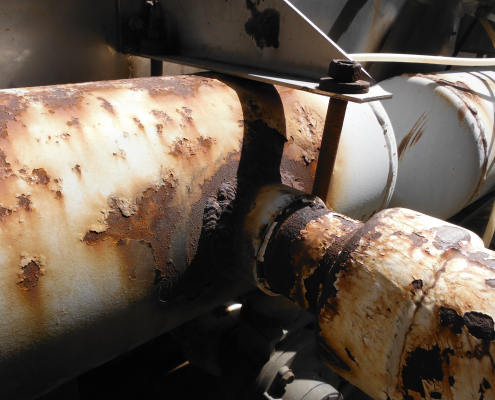
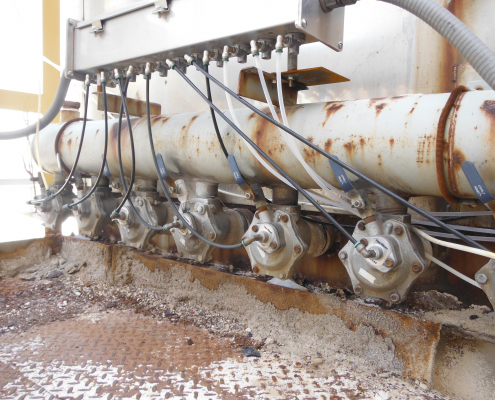
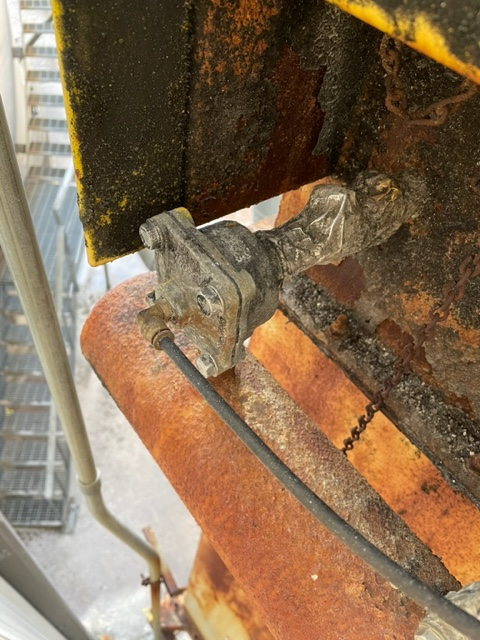
Rusty compressed air header in a dust collector

Rusty compressed air header in a dust collector

Recently, on a site visit, I came across headers so corroded and leaky they looked like they’d been through a war zone. The technician walking with me casually mentioned, “Oh yeah, we patch those a few times a year.” In fact, they were so used to leaks, they had makeshift braces holding the headers down to keep them from rattling loose during pulse cleaning. No pressure gauge in sight, just a whole lot of compressed air going to waste.

Let’s talk about how to prevent that from happening to your system — or how to fix it if it already has.

Why Air Headers and Pulse Valves Matter

rusty air header

rusty air header

Pulse-jet baghouses rely on clean, high-pressure air stored in headers to deliver sharp bursts through pulse valves. These bursts keep your filter bags clean and your system breathing easy. But if the headers are corroded, leaking, or the valves are misfiring, you’re not cleaning — you’re wasting energy, damaging bags, and likely spending way more than you think.

Read more: The Importance of Correct Compressed Air Pressure in a Pulse Jet Dust Collector

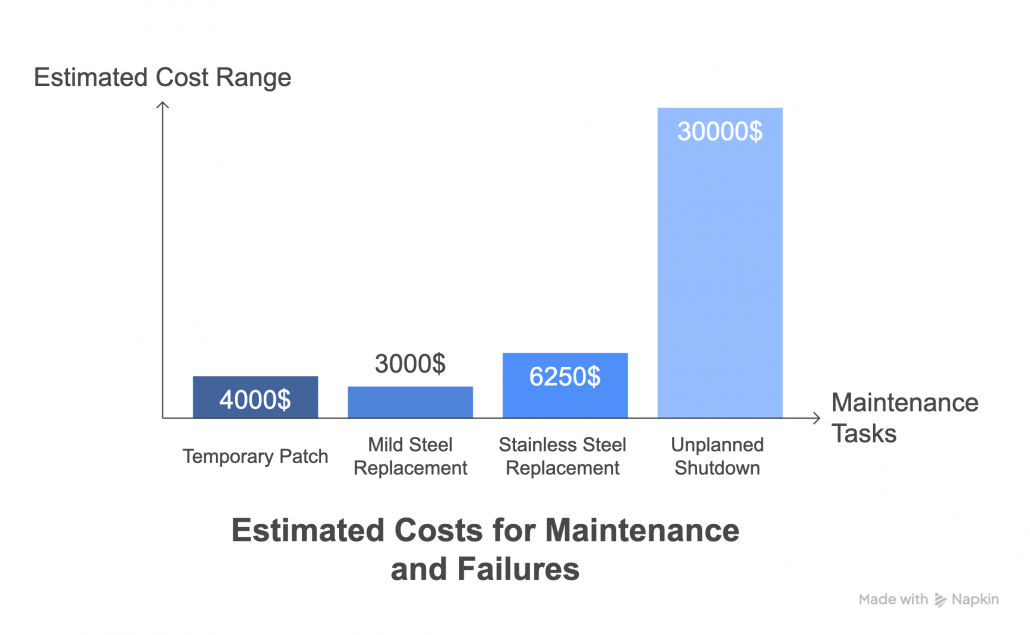
The Real Cost of Doing Nothing

Patching up air headers over and over might seem like a budget-friendly solution — until you count the cost of compressed air loss, labor, lost efficiency, and unplanned downtime.

Here’s a ballpark comparison:

cost of compressed air loss, labor, lost efficiency, and unplanned downtime.

Task

Estimated Cost

Temporary patch (3x/year)

$3,000–$5,000 (labor + air loss)

Replacing header with mild steel (again)

$2,000–$4,000

Replacing with stainless steel once

$5,000–$7,500

Unplanned shutdown due to failure

$10,000–$50,000+

The numbers add up quickly. And that’s without counting the frustration of explaining to upper management why another baghouse went down in the middle of production.

Why Stainless Steel Is Worth It

Stainless steel air headers not only look fancy, they’re functional. They resist the corrosion that eats away at mild steel, especially in humid or outdoor conditions. Install them once, and they’ll likely outlast the bags themselves.

Important tip: When installing SS headers, avoid contact with dissimilar metals (like carbon steel mounts or fasteners). Use insulating wraps or gaskets. Otherwise, you’ll get galvanic corrosion, and you’ll be right back where you started — but now with a more expensive problem.

Water in Your Lines?

One of the leading causes of internal corrosion in air headers is water in the compressed air lines. It sneaks in from improperly drained receivers, faulty dryers, or sometimes just plain humid air.

Purge valves or auto-drains at the bottom of your headers automatically open to release the water, helping to get rid of this moisture before it can collect and cause corrosion. If you don’t have these — it’s time.


What About the Pulse Valves?

Routine inspection and replacement of pulse valves and diaphragms (typically every 1–2 years, depending on conditions) keeps your cleaning sharp and efficient.

Routine inspection and replacement of pulse valves and diaphragms (typically every 1–2 years, depending on conditions) keeps your cleaning sharp and efficient.

Your pulse valves are the workhorses of the cleaning system. But if they’re sticking, leaking, or misfiring, they’ll throw your firing sequence off — and cleaning gets spotty. That means:

  • 🔹 Bags cake up
  • 🔹 Differential Pressure goes up
  • 🔹 Fan has to work harder
  • 🔹 Energy bills climb
  • 🔹 Filter life drops

Routine inspection and replacement of pulse valves and diaphragms (typically every 1–2 years, depending on conditions) keeps your cleaning sharp and efficient.

Multiple Headers? Sync the Firing Sequence

If your collector has multiple air headers, it’s critical that your pulse control system fires valves in sequence — not all at once. Simultaneous firing can cause a pressure drop across all headers, making pulses weak and ineffective.

A simple test: For most applications using felted filter media, compressed air at roughly between 70 and 100 PSI may be recommended for proper cleaning of the filter elements. Check that pressure holds steady (or quickly recovers) during a full cleaning cycle. If it’s dropping like a rock, you’ve got either misfiring valves, leaks, or undersized air supply.


A Little Prevention Goes a Long Way

If your baghouse is a central part of your operation, then keeping your headers, valves, and air lines in top shape it’s essential.

Stainless steel headers, moisture control, working purge valves, and a good pulse sequence setup will pay for themselves in a year or less. And maybe, just maybe, you’ll get to keep your hard hat on next time you walk past the collector.

Would you like some help getting pulse valves, a new air header or purge valves? 

, ,

What Kind of Dust Collector Do I Have? Guide To Baghouse Styles

Often the hardest part about purchasing replacement parts for your dust collection system is identifying what kind of dust collector you have. Use this guide to quickly learn how to identify which dust collector style you have and get your quotes faster. 


Knowing Your Dust Collector is Key To Getting Better Quotes For Replacement Parts and Services

When a potential customer calls or emails us requesting pricing for replacement filters, parts, or services for their dust collection system, we often run into the same problem. “Can you tell me what kind of dust collector you have?” we ask, followed by umI don’t know.” Yes, it is quite common for customers to not know what kind of dust collector they have, let alone the specs for their filter bags, pulse valves, control boards, etc.

Knowing the details about your dust collection system is vital for obtaining information and pricing for products/services such as:

At times, customers may have some obscure part numbers they’ve pulled off a rusty metal plate on the collector… sadly, these almost never result in any meaningful information, since most dust collector OEMs either assign random serial/part numbers to their units or do not provide reference sheets for their products. As such, maintenance personnel, purchasing agents, or others assigned to get pricing for these items do not have the necessary information for us to determine what they need.

With this in mind, we have prepared the following guide to identifying the various types of dust collector styles and configurations.

For determining what kind of replacement filter bags your baghouse requires, please see the article: How To Choose The Correct Dust Collector Filter

Main Types of Fabric Dust Collectors

All fabric filters operate on the same basic principle of passing dust-laden air through a fabric material to capture and remove particulates. The main differences between various dust collectors are the way the filters are cleaned and the type of filters they use.

  • NOTE: Fabric filter dust collectors (i.e. baghouses) are the most common kind of dust collection system used in industry. Electrostatic precipitators, wet scrubbers, and cyclone collectors are also used, often in conjunction with fabric filter units. For this article we will consider only fabric filter dust collectors. 

The three kinds of dust collectors according to cleaning styles are:

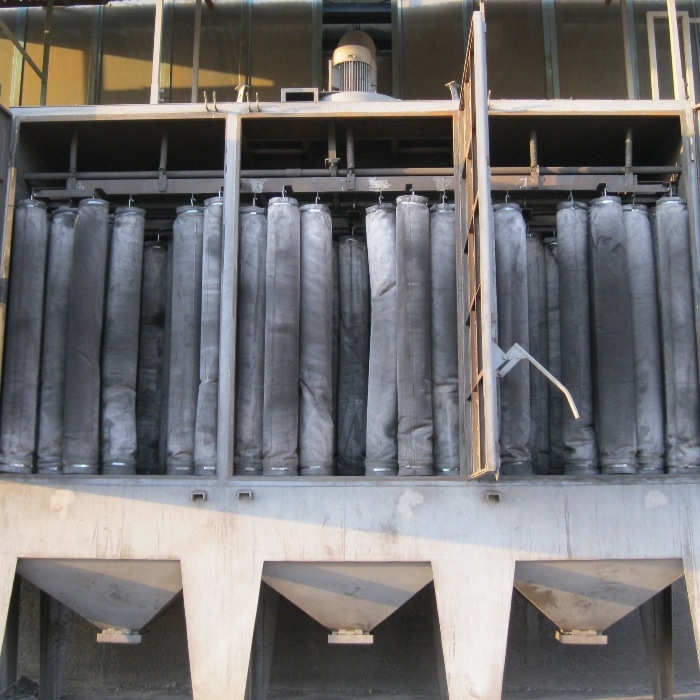
  • 🔸 Pulse Jet – Bags are suspended from a tubesheet at the top of the unit and cleaned by blowing compressed air into the filters from above. Bags are supported by metal wire cages. Cleaning can be accomplished while the unit is running (i.e. online cleaning) using blasts of compressed air directly into rows of bags. The vast majority of units manufactured in the last 30 years are pulse jets. Included in this style are Bin Vents. These small units are basically just small pulse jets with no hopper that dump directly back into the storage vessel when pulsed. These units can be converted to pleated filters.
  • Shaker dust collector inside view

    Notice the bags attached to the shaker rack at the top and at the bottom to thimbles using bag (hose) clamps.

    🔸 Shaker – Bags are attached to a rack or tubesheet shaken by motor(s) to release buildup dust cake and clean the bags. New installations of these systems are uncommon due to inefficiency and high cost of use.

  • 🔸 Medium Pressure Reverse Air – In these systems, bags attach to a tubesheet with a snap band top and then use a metal wire cage for support. Bags are cleaned by a rotating cleaning arm that directs a constant steam of clean air down into each bag as it rotates.  It uses essentially identical bags as a top load pulse jet; some use oval-shaped bags in place of round bags/cages. These can also be converted to pleated filters.
    • NOTE: Medium-pressure reverse air systems (Such as Donaldson RF series) while not as widely-used as pulse jets, are still found in many industries. These units use bags nearly identical to top-load pulse jet bags. 
  • 🔸 Low Pressure Reverse Air – In these systems, bags are attached at the bottom to a tubesheet with large mounting hubs or thimbles, and then suspended from chains and conical springs or “J-Rods” with conical springs and then tensioned from above. Bags are cleaned when the dirty air inlet is closed and a secondary cleaning inlet is opened, then a second system fan (reverse air fan) blows air back into the baghouse from the top, and creates positive pressure collapsing the bags and causing the dust cake to fall off into the hopper. These are almost always very large units (500+ bags), compartmentalized to allow for continuous operation (cannot clean online), and found on foundries, mills, boilers, etc.

Pulse jets account for the vast majority of filters in use today. For that reason, let’s examine the various differences between pulse jet styles.

Identifying Variations of Pulse Jet Dust Collectors


Bottom load dust collector shown from bottom

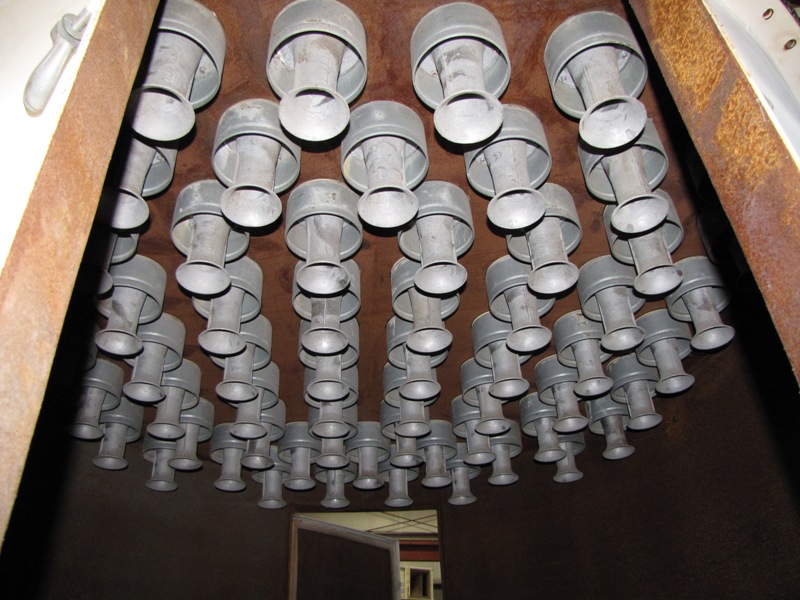
View from underneath a tubesheet in a bottom load dust collector. Note the fixed venturi and mounting hubs where the bags and cages are attached.

  • 🔵 On Bottom Load Dust Collectors (or bottom entry) units, the dirty air plenum is accessed through a door or hatch on the side of the unit (usually near the hopper break) with a walkway inside. The bags are attached to mounting hubs or thimbles on the underside of the tubesheet using a bag clamp (i.e. hose clamp). Replacing the filters requires the technician to enter the dirty side and release the clamp at the top of the filter and then remove the dirty filter and cage from the unit. These units typically take raw edge top, disk bottom bags, and split collar cages. The cages go inside the bag and then the excess fabric is folded over the edge of the cage, and then pushed up onto the mounting hub/thimble and then secured with a clamp.
Modular Pulse Jet Dust Collector with walk-in plenum style

Real-life example of a top load pulse jet dust collector with walk-in plenum. Notice the doors on the catwalk.

  • 🔵 Top Load Dust Collectors (or top entry) permit access from above the tubesheet, on the clean side of the baghouse, usually by removing a top hatch/door and then stepping down onto to the tubesheet. The filters go down into the tubesheet hole from above and then are secured into the holes by either a snap band or use some kind of hold down hardware.

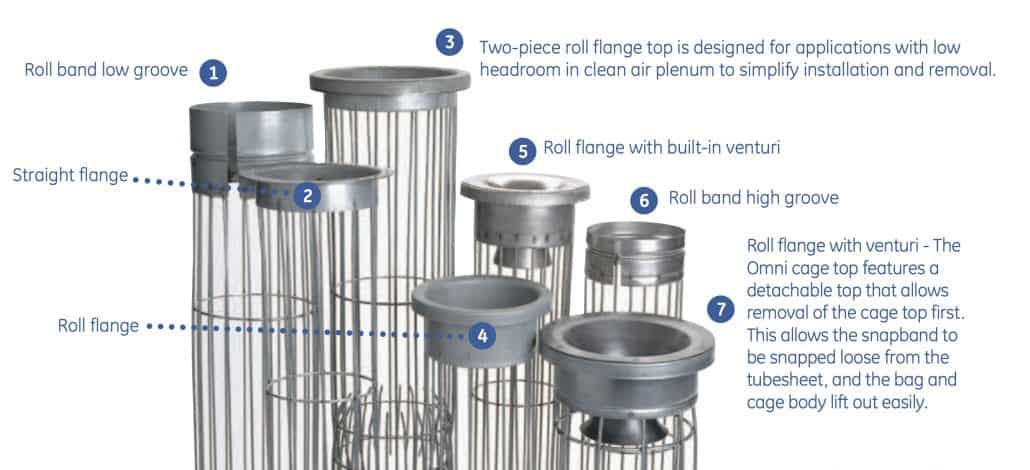
Some top-load units have an enlarged clean air plenum that allows technicians to walk in and remove the bags and cages entirely within the structure. These are called Walk-In-Plenum Top-Entry baghouses. Aside from the enlarged clean air plenum, these units are identical to top hatch/top-entry units. Due to the limited overhead clearance, these units may require two-piece cages to be used.

Top load style units almost always take snap band bags or a variation. Common cage designs include rolled top flange or flat flange. Some cages also have a separate venturi that drop into place, or are part of the cage top. Top entry units can also use pleated filter elements specifically designed for top load units.

Now that you have determined your style of pulse jet baghouse. Next, let’s examine the filters and cages to determine which kind you need.

Identifying The Different Filter, Cage, Cartridges, and Pleated Filter Variations

Next, you must identify the specifics of your filter bags and cage design. Many think that there are “standard” baghouse filters and that all they need is to mention a part number or a make of a baghouse, and the specs can be “looked up” and found. The reality is that in almost all cases, a detailed bag spec is required to get a proper quote.

Generally, to receive an accurate quote for dust collector filters requires the following specs:

✅ Dimensions (length & diameter)

    • ► Flat width (most accurate measurement possible for a round bag)
  • ✅ Top/Bottom Design
  • ✅ Fabric
  • ✅ Treatment/Finish (if any)
  • ✅ Less-common special items
    • ► Grounding wire
    • ► Anti-collapse rings (reverse air only)
    • ► Center or bottom wear strip (for two-piece cages or high abrasion applications)

Read more: How to Measure Your Baghouse Filters & Cages

.

The most common Top/Bottom Construction Styles according to baghouse style:

Top Load Baghouses – Common Bag/Cage Combos

  • 🔵 Filter Bag: Snap band top, disk bottom
    Snap band dust collector bag

    Snap band designs are used for top-load dust collectors

    • ► May include additional wear strip at the bottom of the bag or in the middle (two-piece cages)
  • 🔵 Cage: Rolled top, pan bottom
    • ► Drop-in venturi or integral venturi
    • ► Two-piece cages more common for Walk-In-Plenum variations

Bottom Load Baghouses – Common Bag/Cage Combos

  • 🔵 Filter Bag: Raw edge top, disk bottom
  • 🔵 Cage: Split collar (rolled band) normal or high groove, rolled flange (rolled band), flat flange, top, pan bottom


Selection of Filter Fabrics and Treatments

This depends on what material is being handled and air conditions inside the system (i.e. temperature, presence of acid/alkali gases or other reactive chemicals, etc. Cost is also a factor as some more resilient fabrics would be cost-prohibited in certain applications.

  • 🔶 Low-Temperature Fabric Materials (250F or less) – Polyester (PE), Polypropylene, Cotton, Acrylic and Nylon
  • 🔶 High-Temperature Fabric Materials (250F – 500F) – Aramid (Nomex), Fiberglass, PPS, P-84, PTFE (not to be confused with PTFE coating/membrane)
    • Food Grade fabrics also exist for applications requiring FDA-approved materials.
  • 🔶 Treatments/Finishes and Membranes are used to increase resistance to certain conditions or compounds. Common treatments included humidity/moisture (hydrophobic), oils and hydrocarbons (oleophobic), acid resistance, glazed, singed, egg-shell, PTFE treatment (not membrane) and others.
      • ► A very special kind of treatment is PTFE membrane, which imparts higher collection efficiencies, easier dust cake release (i.e. easier to pulse clean), and extends useful service life. Membranes do not require precoating and can be cleaned more forcefully than normal bags.
    Envelope dust collector filter bags

    Envelope-Shaped bags do exist (Maybe consider converting to newer style bags or pleated.)

  • 🔶 Certain less-common design features include:
    • ► Hold-down hardware (used on older models to hold bags and cages to the tube sheet)
    • ► Non-standard bottoms such as sown flat, open bottom, star-shaped, etc.
    • ► Non-standard tops such as cord, double-beaded-snap band, hangers, grommets, etc.

While the majority of bags are round, there are some older units that used envelope, oval, or other oddly-shaped bags for one reason or another. If this is the case, a accurate measurements and/or photos and samples are required to duplicate.

The thickness of the tube sheet may be required when replacingsnap band bags and cages. Since this varies from manufacturer to manufacturer, it’s often best to verify this before sending your request for a quote. This is especially important when converting older bag and cage styles or when installing pleated filter elements.


Baghouse Cages

Cage designs vary depending on the pulse jet variation. The main variables for baghouse cages are: 

  • 🔵 Dimensions (length x diameter)
  • 🔵 Top/Bottom Design
  • 🔵 Material
    • ► Mild steel/carbon steel, galvanized, epoxy coated, or stainless steel (304, 318, etc.)Different dust collector cage designs from Baghouse.com.
  • 🔵 Number of vertical wires and horizontal wires
    • ► Certain applications/fabrics call for more wires, e.g.  fiberglass bags may take 12, 16, 20 or 24 wire cages)
    • ► Rarely, cages require additional horizontal bracing. Most cages have horizontal wires every 6″
  • 🔵 One or two-piece configurations
    • ► Several different types of two-piece connection styles exist, the most common are “fingers” and twist-lock.

Read more: Top Load Snap Band Baghouse Filter & Cage Measuring Guide

Baghouse Cage Designs - Common Styles

Dust Collectors with Cartridges and Pleated Filters

Proprietary Cartridge Design

Many cartridge collector manufacturers intentionally avoid giving detailed spec sheets, reliable part numbers, or designations to force the customer to continue to buy replacements from them.

In place of bags and cages, some dust collectors use cartridges. Identifying the correct replacement for these can be tricky. Many cartridge collector manufacturers intentionally avoid giving detailed spec sheets, reliable part numbers, or designations to force the customer to continue to buy replacements from them.

In many cases, cartridge collector manufacturers sell units at a loss and then make up the difference by charging high prices for replacement cartridges. While cartridge collector designs vary widely, it is always possible to get replacement cartridges from an aftermarket vendor at discounted rates compared to the original manufacturer.

Generally, to get a quote for a replacement cartridge often the following information is required:

  • ✅ Any part, serial, or model numbers on the cartridge
  • ✅ Collector manufacturer, serial/model numbers
  • ✅ Detailed measurements (Inside diameter, Outside diameter, overall length, and width (ID, OD, OAL, and W respectively)
  • ✅ Type of fabric (see above for differences in fabrics and treatments)
  • ✅ Number of pleats in the fabric (at times pleat depth as well)
  • ✅ Top and Bottom construction (open/closed, open/open, gasket types, etc.)

As with bags, the best option is to send a sample for us to duplicate. When this is not possible, a series of detailed photos, along with the measurements and information above, will ensure a compatible replacement is found.

Pleated Filter Elements


Pleated dust collector filter

A pleated filter element is NOT the same as a cartridge. Pleated filters often replace traditional bags and cages in both top load and bottom load pulse jet collectors.


In many cases, manufacturers design newer baghouses to use pleated filter elements (also called pleated bags) in place of standard bags and cages. Though similar, pleated elements differ from cartridges in both application and operation.

Generally, they are not suitable for high temperatures and excessively abrasive dust.

Pleated filter quotes require the same basic information as bag quotes, namely, dimensions, fabric/treatment, and baghouse style (bottom load or top load).

See the article Pleated Baghouse Filters: A Smarter, More Cost-Effective Solution!

Now You Can Get a Quote For Replacement Filters

Now you should be able to identify what kind of dust collector you have and what kind of filters it uses. This should enable you to gather the information needed for a pricing quote on replacement filters, or engineering services.

Now when you call in and ask for a quote you will be able to provide the needed information for our sales associates to help quote your filters and cages.

  • 🔸 Baghouse.com Associate: “What kind of baghouse do you have?”
  • 🔹 Your Answer: “We have a top-entry, pulse jet baghouse.”
  • 🔸 Baghouse.com Associate: “What kind of filters and cages does it take?”
  • 🔹 Your Answer: “The bags are snap band top, disk bottom, aramid (Nomex) with PTFE membrane, 6″ x 120″, with a 6.25” tubesheet hole, with a QTY of 400. The cages are rolled-top, with integral venturi, 12 vertical wires, made from galvanized steel, QTY 400. “
  • 🔸 Baghouse.com Associate: “Excellent! I can get you pricing on that right away.” 

Still confused after this article? It’s ok, that’s what we are here for. Give us a call at (702) 848-3990 or email us here and we will be happy to walk you through the process. And if all else fails, you can always send us a sample filter to examine and leave the rest to us.

Read and download our FREE Guide on How to Measure Baghouse Bags and Cages

Slide 1 Heading
Lorem ipsum dolor sit amet consectetur adipiscing elit dolor
Click Here
Slide 2 Heading
Lorem ipsum dolor sit amet consectetur adipiscing elit dolor
Click Here
Slide 3 Heading
Lorem ipsum dolor sit amet consectetur adipiscing elit dolor
Click Here
Slide Heading
Lorem ipsum dolor sit amet, consectetur adipiscing elit. Ut elit tellus, luctus nec ullamcorper mattis, pulvinar dapibus leo.
Click Here

How Can I Buy My Dust Collector Filters Cheaper?

When the time comes to replace your worn-out baghouse filters, what do you normally do?


Certain filter OEMs make people believe they are locked into a proprietary filter design that only they can supply and that without this one piece, their system won't work efficiently

Certain filter OEMs make people believe they are locked into a proprietary filter design that only they can supply and that without this one piece, their system won’t work efficiently

Do you just call up the original baghouse system manufacturer or sales rep that supplied you with it armed with a filter part number or gibberish product codes and then wait just to get a sky-high price? 

Certain manufacturers deliberately sell their units cheaper and then make people think they are locked into a proprietary filter design that only they can supply, and thus, they charge outrageously high prices for them.

This is common with many cartridge collector OEMs, whereby they win the initial unit sale by undercutting other manufacturers and then plan on making their profit on the expensive replacement filters later on. This marketing technique is commonly called the “razor blade” system, for its well-known use by makers of disposable razors and cartridges.

At that moment, you may wonder, “Can I buy my dust collector filters cheaper?” Well, the simple answer is YES!

Here at Baghouse.com, we offer replacement filters, cartridges, and pleated filters for all makes and models of dust collectors, including the most popular brands, such as Farr, Donaldson/Torrit, and more. Our prices often come in significantly cheaper than buying directly from the original dust collector manufacturer, sometimes as much as 50% less!


Read the related article: Why Are Some Baghouse Filters More Expensive Than Others?

The Real Reason They Only Give Vague Part Numbers For Your Baghouse Filters

Many dust collector manufacturers and sales rep organizations that resell other OEM’s dust collectors will go to great lengths to keep you from getting pricing from aftermarket filter manufacturers. This is because they often charge far more than the going market rate for replacement filters. They do this by holding back information that you can use to get a quote elsewhere by using vague and nonsensical part numbers. 

We can compare it to buying a new car. The dealer told you that to keep the car in the best mechanical shape, you need to have the car serviced and maintained only at the dealership with “genuine” parts. But as we know, high-quality parts and servicing can be found in many places and at a more economical price.

The same applies to purchasing dust collector filters. When you first bought your baghouse system, the manufacturer may have provided nothing more than a part number for your baghouse filters. This is an attempt to keep you buying parts from them. OEMs usually don’t tell you any details about your filters. Nothing about the size, the material, the type, etc, just a part number. Some OEMs go even further and provide no parts list at all! So when you need to replace the filters all you have is the part number or model/serial number of the unit. So you may think that have no choice but to purchase your filters and other parts directly from them, at whatever price they decide on. 

______________

Would you like to explore the possibility of replacing your common filter bags for pleated filters? Read this article! Pleated Baghouse Filters: A Smarter, More Cost-Effective Solution!

Save on Your Replacement Baghouse Filters by Ordering Direct with Baghouse.com

Baghouse.com filters are manufactured to meet the highest quality standards

Baghouse.com filters are manufactured to meet the highest quality standards

By going directly to a filter manufacturer like Baghouse.com, you can reduce your spending on dust collector filters by 20% – 50% compared to purchasing them through your system supplier. Baghouse.com filters are manufactured to meet the highest quality standards and can be found in thousands of facilities across North America in some of the toughest applications. 


Additional info: How To Get The Best Price For Baghouse Filters?

What Kind of Baghouse Filters Do You Have? 

To receive a quote on your filters, all we need is some basic information about your filters:

  • 🔹 Style: Bag, cartridge, pleated filters (Note: Cartridge part numbers are more consistent and can often be cross referenced)
  • 🔹 Basic dimensions: Length and diameter (or flat width)
  • 🔹 Filter Media: Base fabric such as polyester, aramid, fiberglass, etc., and treatment or coating if present such as singed, glazed, oleophobic coating, flame retardant, PTFE membrane, etc. 
  • 🔹 Filter Construction: Common styles include snap band top for top load pulse jets; raw edge top for bottom load pulse jets, metal hanger top for shaker baghouses, etc. 

With this information, Baghouse.com can provide you with the highest quality and most economical dust collector filters for your system. No more being locked into the high prices provided by your system supplier. 

To find out more information about purchasing your dust collector filters and to obtain a quote please contact us by clicking here.